
You may have seen headlines online claiming that new home inventory is at its highest level since the housing crash. And if you lived through 2008, that comparison might sound a little alarming. After all, seeing new construction rising again could make it feel like we’re heading for the same kind of trouble.
But here’s the key thing to remember: a lot of what you see online is designed to get clicks. That means you may not be getting the full story. When you dig deeper into the data and listen to the experts, the picture looks very different.
Why This Isn’t Like 2008
Yes, it’s true—new home inventory has climbed to its highest point since the crash. But that stat alone doesn’t tell the whole story. New builds are just one piece of the housing supply puzzle. To really understand how today compares to 2008, you need to look at both new homes and existing homes (homes that have already been lived in).
When you put those numbers together, it becomes clear: today’s total housing supply looks nothing like what we saw leading up to the crash. Back then, inventory flooded the market. Right now, we’re nowhere near those levels.
Builders Have Been Playing Catch-Up for 15+ Years
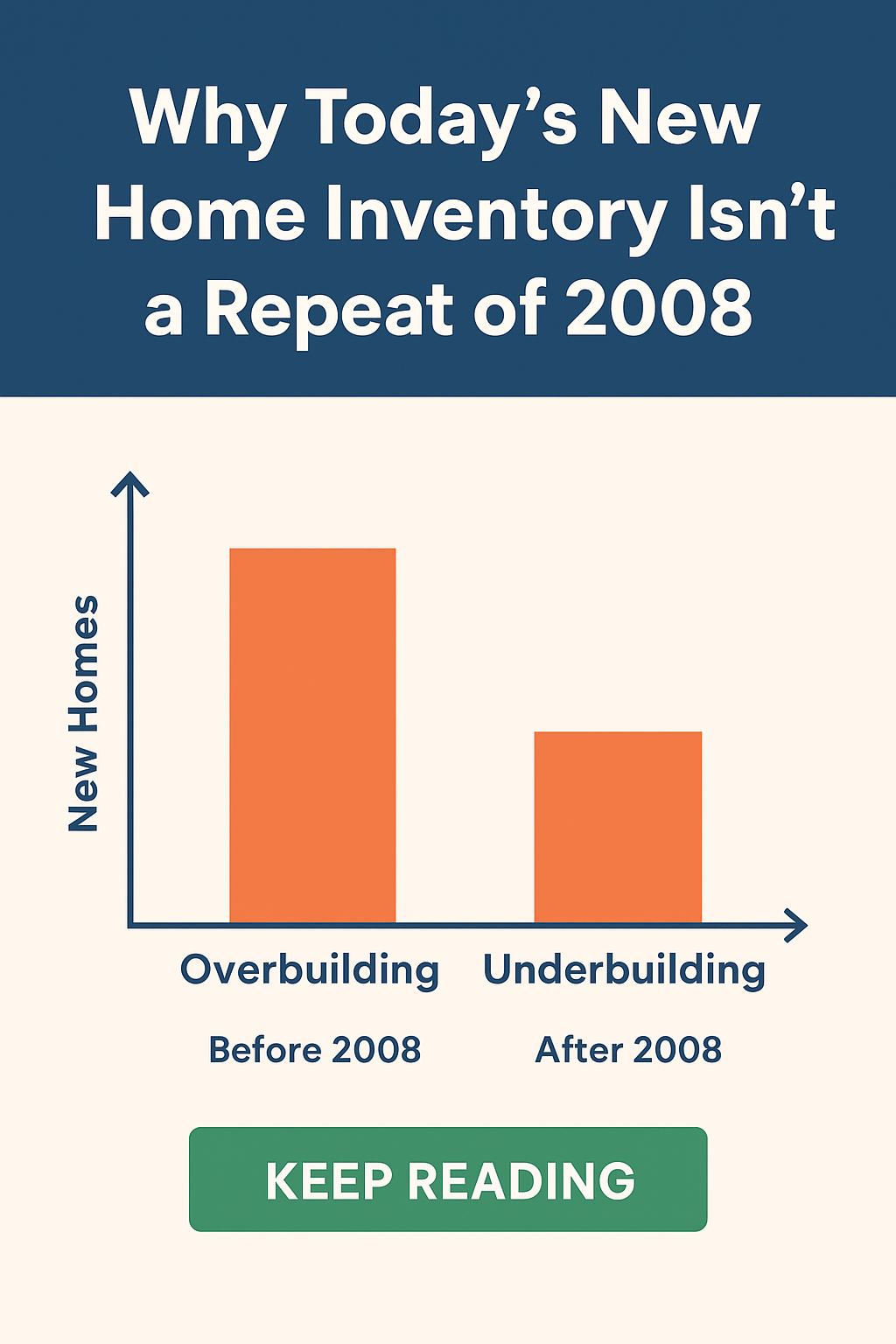
Another important factor you won’t hear in many headlines: after 2008, builders essentially slammed on the brakes. For over 15 years, they consistently underbuilt compared to buyer demand. That left us with a massive housing shortage—something we’re still dealing with today.
The data from the Census Bureau makes this clear:
- Before the crash: Builders were overbuilding (too many homes for the level of demand).
- After the crash: Builders pulled back too far, creating years of underbuilding.
Even with the growth we’re seeing today, it’s not an oversupply problem—it’s actually the beginning of catching up. In fact, experts at Realtor.com estimate it could take another 7.5 years of steady building to close the gap created over the past decade and a half.
Why This Matters for Buyers and Sellers
Like anything in real estate, supply and demand varies by location. Some markets may feel more balanced, while others still feel very tight. But nationally, this is not a repeat of 2008.
- For buyers: More new construction means more options, which can ease competition.
- For sellers: Demand is still strong, and housing shortages remain in many markets, so well-priced homes continue to move.
Bottom Line
Don’t let clickbait headlines fool you—today’s new home inventory isn’t a sign of another crash. Instead, it’s part of a long-overdue correction after more than 15 years of underbuilding.
If you’re curious about how much new construction is happening in your area—or wondering what it means for your buying or selling plans—connect with a trusted local real estate agent. They’ll help you see the real picture behind the numbers.


